


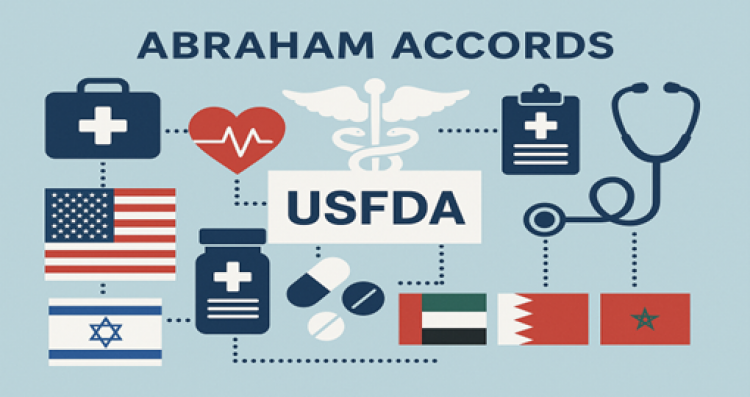
How proactive FDA policies can help strengthen the American pharmaceutical supply chain of essential medicines, create jobs through increased domestic manufacturing, reward our global allies, and further support peace in the Middle East.
Peter J. Pitts
- Senior Fellow, U.S. Israel Education Association
- President, Center for Medicine in the Public Interest
- Visiting Professor, University of Paris School of Medicine
- Former Associate Commissioner, U.S. Food and Drug Administration
Cathy McMorris Rodgers
- Congresswoman, Washington’s fifth congressional district, 2005-2025
- Congressional representative to the United Nations General Assembly, 2019-2020
- Co-Founder, Abraham Accords Congressional Caucus
- Fellow, U.S. Israel Education Association
Executive Summary
Problem: Foreign nations are holding America’s medicine cabinets for ransom. Today there is the very real risk of drug shortages being caused, on purpose, by foreign governments for political goals that put American patients at risk.
Solution: On-shore when possible. Friend-shore where plausible.
The creation of an FDA Abraham Accords Office represents a pragmatic, forward-looking solution to one of the most pressing structural weaknesses in U.S. public health security: its dependence on fragile and opaque pharmaceutical supply chains in China and India.
We must extricate our medical supply chain from countries that could weaponize this dependence, by manufacturing on our own shores when practical and shifting our foreign partnerships from places like China to more friendly nations such as those of the Abraham Accords. That’s called “Friend-Shoring,” relocating manufacturing capacity to trusted partners who share regulatory standards and political alignment.
The Abraham Accords nations — Israel, the United Arab Emirates, Bahrain, and Morocco — combine advanced health infrastructure, political stability, and shared strategic alignment with the United States. Establishing an FDA presence in the region transforms diplomatic goodwill into a tangible health-security architecture.
Conceptual Framework
An FDA Abraham Accords Office would serve as a regional regulatory mission—a forward-deployed extension of the FDA. Its purpose is to institutionalize friend-shoring, enabling the U.S. to diversify supply chains for essential medicines through trusted partners while maintaining the FDA’s “gold standard” for oversight.
From a macro-policy standpoint, the Office bridges three national priorities:
- Economic security — reducing exposure to monopolized supply nodes.
- Public health — ensuring uninterrupted access to essential medicines; and
- Diplomatic leadership — demonstrating that the U.S. can convert alliances into shared prosperity.
Strategically, the Abraham Accords Office would become the first multilateral FDA mission — a model for how regulatory cooperation can complement defense and trade alliances. It operationalizes the U.S. commitment to trusted-partner supply chains, consistent with the National Security Strategy.
This creates the basis for “trusted regulatory partners” — nations whose systems interoperate securely with U.S. and allied supply chains without compromising standards or exposing vulnerabilities. These turn abstract diplomacy into life-saving capabilities — concrete, operational partnerships that enhance crisis resilience and save lives through coordinated action.
In a world where supply disruptions can endanger national stability as much as military threats, ensuring access to essential medicines is an act of sovereignty. By anchoring the FDA’s “gold standard” in the heart of the Middle East, the United States can secure its domestic medicine cabinet, elevate regional trust, and pioneer a global framework for resilient pharmaceutical governance.
This initiative is not an alternative route to FDA approvals, but a supplementary service. Companies in the region can choose to utilize this resource to enhance their understanding and approach to the FDA process or proceed through the traditional development and submission pathways. Freedom of choice is important to preserving the integrity of the regulatory framework while offering additional support to our allies in the region.
Next Steps: Engage the Healthcare Security Ecosystem
What are the next steps to be taken to make this FDA Abraham Accords Office a reality? One practical idea is to create a multi-disciplinary, multi-agency public/private taskforce potentially co-chaired by the Commissioner of the Food and Drug Administration and a former Member of Congress (from the House Energy and Commerce Committee or Senate Committee on Health, Education, Labor and Pensions) charged by the White House to develop a detailed plan of action. Federal agency participation should include interested parties from the United States Congress, the departments of Health and Human Services, State, War, Commerce, the Office of the US Trade Representative, and the White House.
Any proper risk-benefit analysis of this initiative shows a highly positive outcome for both the Abraham Accords region and the United States. For the region, it represents an opportunity to elevate its biopharmaceutical sector to new heights on the world stage. For the U.S., it means access to a wider array of medical innovations and a strengthened supply chain — all within a framework that prioritizes patient safety. And, it must be said, that more integrated business efforts between the nations of the Abraham Accords further strengthens the bonds of regional friendship and peace.
- Abstract
The COVID-19 pandemic exposed critical vulnerabilities in the U.S. pharmaceutical supply chain, demonstrating a strategic over-reliance on China and India for active pharmaceutical ingredients (APIs) and essential finished medicines. Analyses by the Food and Drug Administration (FDA), Government Accountability Office (GAO), and the Brookings Institution reveal that roughly 80 percent of key drug ingredients for the U.S. market are sourced from Asia, often through opaque intermediaries that obscure quality and origin. This dependency poses national-security and public-health risks, undermining the resilience of the American medicine cabinet.
Congressional initiatives inspired by the Abraham Accords propose the creation of an FDA Abraham Accords Office to formalize regulatory cooperation and friend-shoring among Israel, the United Arab Emirates (UAE), Bahrain, and Morocco. Drawing on comparative data from FDA quality reports, regional manufacturing analyses, and international innovation indexes, this paper argues that an FDA presence in these partner nations would diversify the pharmaceutical base, foster technology transfer, and institutionalize real-time oversight. Israel offers deep innovation capacity and biologics expertise, while the UAE provides scalable manufacturing infrastructure and advanced regulatory data protection. Together, these partners can help the United States reduce exposure to supply disruptions, promote ethical standards, and strengthen health diplomacy across the Middle East.
Keywords: Pharmaceutical policy; Supply-chain resilience; FDA oversight; Abraham Accords; Friend-shoring; Health diplomacy; Drug manufacturing; National security
- Introduction
Foreign nations are holding America’s medicine cabinets for ransom. Today there is the very real risk of drug shortages being caused, on purpose, by foreign governments for political goals that put American patients at risk.
Our national supply chain for essential medicines, for both domestic use and for soldiers in the field, is a global one. One key problem is that we have allowed countries, not always friendly to our own national interests, to have their fingers on the buttons that control the flow of pharmaceuticals and medical devices (both finished products and Active Pharmaceutical Ingredients) to our shores.
According to the United States Pharmacopeia’s (USP) recently updated Medicine Supply Map, a comprehensive look at Key Sourcing Materials (KSMs -- the foundational chemicals necessary to commercially synthesize active pharmaceutical ingredients (APIs)) illustrates some disturbing vulnerabilities:
- Most KSMs depend on single-country sourcing
- 58% of KSMs used for US-approved APIs are sole sourced from a single country.
- Sourcing clusters in China and India
- 41% of KSMs used in US-approved APIs are sole sourced from China.
- 16% of KSMs used in US-approved APIs are sole sourced from India.
China is the sole supplier of at least one KSM for 679 APIs, accounting for 37% of all APIs in the analysis. India is the sole supplier of at least one KSM for 402 APIs accounting for 22% of all APIs in the analysis. Per USP, “Policymakers in federal agencies and Congress should take action to address KSM sourcing vulnerabilities. To strengthen America’s medicine supply chain, we should incentivize geographically diverse manufacturing through onshoring and friend-shoring and modernize procurement practices to prioritize reliability and resilience alongside cost.”
Note: The Center for Medicine in the Public Interest participates as a member of the United States Pharmacopeia’s Drug Shortage Task Force
- FDA’s Operation Precheck: A Model and a Moment
At a recent public meeting to discuss the FDA’s new “PreCheck” program, more than half of pharmaceuticals distributed in the U.S. are manufactured overseas. Further, the U.S. is reliant on overseas sources for APIs. According to the FDA’s Report of the State of Pharmaceutical Quality, of the 4619 manufacturing sites in the FDA’s database, 41% are foreign. Over the last five years, US-based pharmaceutical manufacturing increased 7% while site in China increased 27% and those in India by 18%. Of 168 FDA-regulated manufacturing sites for essential medicines, 80% are solely reliant for their active pharmaceutical ingredient (API) on foreign facilities.
According to the FDA, “We don’t know whether Chinese facilities are actually producing APIs, how much they are producing, or where the APIs they are producing are being distributed worldwide, including in the United States. Similarly, we do not have information that would enable us to assess the resilience of the U.S. manufacturing base, should it be tested by China’s withdrawal from supplying the U.S. market.”
Patient safety is taking second place to supply chain savings. And we are playing Russian Roulette with often unsavory Chinese partners and their political masters. Why have we allowed this to happen? That answer is simple – follow the money.
In nations such as the People’s Republic of China, labor is cheap, quality standards are often low, and FDA oversight is both thin and limited. Thin because of the absurdly small number of in-country FDA inspectors and limited because of the restraints placed on those inspectors by Beijing to undertake and accomplish such basic tasks as surprise inspections. (The FDA conducts approximately 12,000 domestic inspections and 3,000 foreign inspections each year in more than 90 countries per year. As of May 2025, the FDA had completed only 81 inspections in China.)
When you are required to tell them you’re coming, manufacturing logs get altered, factory floors get cleaned, expired supplies get moved, and access to many key areas get restricted. This is a recipe for disaster.
We have not learned from the lessons of Covid-19. During the pandemic, we suffered an acute shortage of contrast agent -- the substance used in medical imaging to enhance the visibility of organs, blood vessels, and tissues, making them appear clearer on X-rays, CT scans, and MRIs.
In 2022, a large contrast agent manufacturing facility outside of Shanghai shut down during a pandemic lockdown. Here at home, this resulted in radical decreases in angiograms, perfusion scans, and other tests crucial for stroke assessments, cancer diagnoses, and other urgent medical care. This one plant in China provides almost all the contrast agent used in the United States. It’s not hard to imagine similar supply chain crises for diabetes test strips or ADHD medications, or penicillin driven by geopolitical purposes.
It’s not hard to imagine – because shortages of these products are already happening due to our lack of interest and oversight.
And that’s not even mentioning the deaths that have occurred because of inappropriate quality oversight. In 2008, substandard heparin from China (an anticoagulant used to decrease blood clotting), killed 81 people, and left 785 severely injured -- in the United States. These are supply chain deaths.
What can we do about it? We need to strengthen our national supply chain for essential medical products by insisting that the FDA more forcefully and strategically use its authorities to more closely monitor materials sourcing and manufacturing and to advance both on-shoring and friend-shoring manufacturing strategies.
We must extricate our medical supply chain from countries that could weaponize this dependence, by manufacturing on our own shores when practical and shifting our foreign partnerships from places like China to more friendly nations such as those of the Abraham Accords. That’s called “Friend-Shoring,” relocating manufacturing capacity to trusted partners who share regulatory standards and political alignment.
The Abraham Accords transformed regional diplomacy and now serve as a foundation for expanding trade, innovation, and security cooperation. Extending them to pharmaceutical regulation represents a natural next phase: turning peace agreements into instruments of health security.
- FDA PreCheck 2.0
The refreshing philosophy of the Trump FDA has been “proactive not reactive.” This philosophy is timely on several different fronts, controversial on many, and potentially a game-changer when it comes to both advancing domestic pharmaceutical manufacturing and strengthening our domestic supply chain for essential medical products through Friend-Shoring. A corollary mantra should be, “On-shore when possible. Friend-Shore where plausible.”
Generic drugs comprise approximately 90% of all drugs used (by volume) in the United States. Thanks to the foresight of Hatch/Waxman legislation, generics generally cost about 80% less than their brand name equivalents. Such low costs (due to lower labor costs, fewer environmental regulations, manufacturing requirements, less robust oversight, etc.) make it unlikely for them to be manufactured in the United States. But it does not mean they need to be manufactured (not API nor finished product) in China. It is, however, economically feasible for nations more friendly to the United States and more aligned with our national interests to be a friendlier home for the manufacturing of essential generic medical products. Current White House policy is to place no tariffs on generic pharmaceutical medicines. Why should nations deemed adversarial to our national interests benefit from such a tariff policy when our allies are ready to step forward and participate in an aggressive program of pharmaceutical friend-shoring?
Any proper risk-benefit analysis of this friend-shoring initiative shows a highly positive outcome for both the nations of the Abraham Accords and the United States. For the members of the Abraham Accords, it represents an opportunity to grow their own biopharmaceutical sectors. For the U.S. it means a strengthened supply chain forged with stronger fraternal links — all within a framework that prioritizes quality, patient safety, and cost-savings.
As President Eisenhower said, “In the final choice a soldier's pack is not so heavy as a prisoner's chains.”
The COVID-19 pandemic marked a watershed moment for global pharmaceutical governance, revealing both the efficiency and fragility of the modern supply chain. In the United States, more than 70% of active pharmaceutical ingredient (API) manufacturing sites registered with the Food and Drug Administration (FDA) are located outside U.S. borders — predominantly in China and India. According to the Brookings Institution report “U.S. Drug Supply Chain Exposure to China”, the concentration of API production in China has increased by over 40% in the past decade, making the United States dependent on a single geopolitical competitor for the chemical precursors of nearly every essential medicine.
When China and India restricted exports of key materials during the early months of the COVID-19 crisis, U.S. hospitals and pharmacies experienced immediate shortages of antibiotics, anesthetics, and oncology drugs. These disruptions were not isolated events; rather, they reflected structural weaknesses in the globalized supply network that the FDA and the Government Accountability Office (GAO) have long warned about. A 2024 GAO report concluded that the United States lacks “visibility into foreign manufacturing” for 63% of critical drugs and that inspection coverage remains uneven.
As discussed above, “friend-shoring” has emerged as a pragmatic response. It aligns economic resilience with strategic diplomacy. Under this paradigm, supply-chain security is not achieved through full reshoring (which remains cost-prohibitive) but through the creation of redundant, geographically diversified nodes in friendly jurisdictions.
Congress has recognized this opportunity through bipartisan proposals — notably the United States-Abraham Accords Cooperation and Security Act (H.R. 7155 (2024) and H.R. 1794 (2025)) — which envision establishing an FDA Abraham Accords Office within the Department of Health and Human Services (HHS). This office would serve as a liaison hub between the FDA’s global operations and regulatory counterparts in the Accords nations, facilitating harmonized quality standards, inspections, and research collaboration.
This paper builds upon that legislative foundation, combining public data from the FDA, GAO, and Brookings with regional analyses of Israel and the UAE’s life-sciences sectors. It assesses how an FDA Abraham Accords Office could reduce strategic dependency, accelerate innovation, and strengthen the U.S. essential-medicines base — transforming health security into a pillar of American diplomacy.
- The U.S. Supply-Chain Exposure
The fragility of the U.S. pharmaceutical supply chain is not a new discovery; it is a long-recognized vulnerability that the COVID-19 pandemic brought to the forefront. The above referenced reports from the Brookings Institution, FDA, and GAO demonstrate that the United States has become structurally dependent on foreign—especially Chinese and Indian—sources for the active pharmaceutical ingredients (APIs), intermediates, and precursor chemicals required to manufacture essential medicines.
Quantifying Dependency
The 2023 Brookings Institution report concluded that approximately 80% of all APIs used in U.S.-marketed drugs are manufactured abroad, and that China accounts for nearly 30–40% of total U.S. import volume for key antibiotics, cardiovascular agents, and analgesics (Brookings). The report identified more than 150 essential medicines where the United States relies on China as a dominant supplier. Among these are antibiotics (amoxicillin, azithromycin), sedatives (midazolam, propofol), and cardiovascular drugs (enalapril, amlodipine).
FDA’s FY 2024 Annual Report on the State of Pharmaceutical Quality supports these findings, documenting that only 13% of registered API facilities serving the U.S. market are domestic, compared with 63% in Asia and 24% in Europe. Meanwhile, the GAO’s 2024 Drug Shortages Report highlighted that supply disruptions in China and India accounted for over half of all FDA drug shortage notifications between 2020–2023.
These figures illustrate an acute form of concentration risk—where both geographic and supplier diversity are limited. Unlike microchips or energy, pharmaceuticals lack a readily substitutable supply base, meaning that any disruption will result in direct and immediate consequences for patient care and public health.
Strategic and Regulatory Gaps
Brookings identified a second vulnerability: information opacity. Although the FDA maintains a global registry of manufacturing facilities, companies are not required to disclose the geographic origin of APIs or intermediates used in their supply chains. As a result, U.S. policymakers often have “no line of sight” into where essential drug components originate. The Government Accounting Office (GAO) confirmed this data deficit, noting that for 63% of critical drugs, the FDA could not determine the country of API production because of incomplete manufacturer filings. It is time for a serious discussion about giving the FDA more direct regulatory authority requiring more regular and complete collection of such information from pharmaceutical manufacturers.
Compounding this is the inspection gap. As of 2024, the FDA had inspected fewer than 10% of Chinese API plants and 18% of Indian facilities registered to supply the U.S. market. Many inspections are announced in advance and rely on third-party translators, limiting effectiveness. These oversight constraints, combined with pandemic-era travel restrictions, have reduced FDA’s ability to verify compliance with current Good Manufacturing Practices (cGMP).
Economic and National-Security Implications
The Brookings study warned that “China’s near-monopoly in antibiotic precursor manufacturing constitutes a latent national-security threat.” A disruption—whether from trade conflict, pandemic lockdowns, or intentional withholding—could paralyze hospital supply chains. Economic consequences are equally severe: GAO estimates that drug shortages cost U.S. hospitals $11 billion annually in labor, substitution, and delayed care.
The FDA has underscored that maintaining a resilient supply chain requires both geographic redundancy and regulatory harmonization.
The Strategic Rationale for “Friend-Shoring”
“Friend-shoring” represents a middle path: reducing risk through trusted international diversification rather than isolation. Instead of repatriating all manufacturing to the U.S.—an economically and environmentally challenging prospect—production can be redistributed among politically aligned, regulation-compatible partners.
The Brookings Institution, CMPI, and FDA Office of Pharmaceutical Quality have each argued that friend-shoring critical API and dosage manufacturing to reliable partners could simultaneously enhance resilience, lower long-term costs, and increase transparency. Such partners must share not only U.S. security interests but also FDA-compatible regulatory standards.
The Abraham Accords nations—Israel, the United Arab Emirates, Bahrain, and Morocco—fit this profile uniquely. They combine stability, advanced infrastructure, and an existing diplomatic framework for cooperation. Establishing an FDA Abraham Accords Office within this context would embed the agency’s oversight functions within a geopolitically trusted zone, ensuring both redundancy and quality assurance. It is important to note that the FDA’s Abraham Accords office will not in any way address the domestic pharmaceutical regulatory issues of member nations. The office’s rasion d’etre is to facilitate healthcare technology commerce.
- The Abraham Accords Framework and Legislative Context
Origins and Strategic Vision
The Abraham Accords, signed in 2020, established normalized relations between Israel, the United Arab Emirates (UAE), Bahrain, and later Morocco, under U.S. sponsorship. While initially focused on diplomatic and defense cooperation, the agreements quickly evolved into a platform for economic integration, research collaboration, and technology transfer across the Middle East. The framework is uniquely suited to advance health-sector diplomacy because it couples political stability with technical capacity and a shared commitment to innovation and regulation.
From a U.S. policy perspective, the Accords have tremendous potential, not only as facilitating regional peace, but as a strategic diversification tool for essential medical products by creating new regional supply chains and innovation hubs aligned with Western needs and standards.
Legislative Foundations
Recognizing this potential, members of Congress introduced bipartisan legislation to institutionalize health-sector cooperation under the Accords umbrella. The most direct vehicle is the United States-Abraham Accords Cooperation and Security Act—introduced in successive sessions as H.R. 7155 and S.5517 (2024) and H.R. 1794 (2025). These bills propose the establishment of an FDA Abraham Accords Office within the Department of Health and Human Services (HHS).
The Office’s mission, as articulated in congressional briefings and committee reports would be to:
- Enhance regulatory cooperation among the United States and Abraham Accords partners.
- Facilitate the establishment of regional manufacturing centers for essential medicines.
- Provide technical assistance to partner nations in adopting or aligning with FDA Current Good Manufacturing Practices (CGMP) and Good Clinical Practice (GCP) standards.
- Coordinate joint inspection programs and data-sharing agreements; and
- Serve as a diplomatic conduit linking U.S. global-health policy with regional economic development.
Operational Rationale
Placing an FDA presence within the Abraham Accords region serves two parallel objectives:
- Health security: It creates an additional layer of regulatory redundancy outside East Asia.
- Foreign policy synergy: It translates a peace accord into tangible public-health and economic benefits, reinforcing U.S. leadership through science-based diplomacy.
Operationally, the office would function similarly to FDA’s existing foreign posts in Europe, India, and China, but with a multilateral rather than bilateral mandate. It would coordinate across four nations under a single umbrella office, ensuring harmonized inspection protocols, data exchange, and emergency-response coordination.
Institutional Support and Bipartisan Consensus
Policy think-tanks including the Center for Medicine in the Public Interest, the Foundation for Defense of Democracies, and the Atlantic Council have endorsed the concept of an FDA presence in the Middle East as both a security imperative and an innovation accelerator. Congressional hearings in 2024 and 2025 reflected rare bipartisan alignment --framing pharmaceutical resilience as a non-partisan national-security issue akin to semiconductor manufacturing under the CHIPS and Science Act.
Representative Diana Harshbarger’s [R-TN] testimony before the House Energy and Commerce Committee emphasized that “an FDA Abraham Accords Office would not only secure our medicine supply but also export the gold standard of U.S. drug regulation to our allies.” The FDA’s own Office of Global Policy and Strategy echoed this, noting that regional hubs offer “high return on oversight investment” by concentrating multiple inspection-ready facilities within cooperative jurisdictions.
Policy Linkages to U.S. Economic and National-Security Strategy
The National Security Strategy (2025) identifies supply-chain resilience as a pillar of economic security, calling for the “trusted-partner localization” of critical production. The FDA Abraham Accords Office would operationalize that strategy within the pharmaceutical domain. It bridges health, trade, and diplomacy—transforming foreign-policy architecture into a mechanism for essential-medicine security.
By integrating regulatory oversight with friend-shoring, the initiative also supports U.S. objectives under the Inflation Reduction Act (domestic production incentives) and America COMPETES Act (supply-chain innovation grants). These synergies position the Bureau as a scalable model for multi-regional pharmaceutical resilience.
- Israel’s Pharmaceutical Capacity
Israel’s pharmaceutical base blends large-scale generic manufacturing with specialty biologics and a high-intensity innovation ecosystem. Teva Pharmaceutical Industries anchors the sector, integrating API and finished-dose capabilities and increasingly emphasizing complex generics, biosimilars, and branded assets, while mid-sized firms (Dexcel, Taro/Sun, Kamada, Rafa, Trima, CTS, Neopharm, etc.) diversify the capability set across oral solids, sterile/topical dosage forms, and plasma-derived biologics. In 2024, Israel exported US$1.82 billion in pharmaceuticals and largely maintained continuity despite security disruptions—performance attributed to robust business-continuity planning and tender-based domestic procurement through Israel’s four Health Maintenance Organizations.
Regulatory alignment. Israel’s Ministry of Health (MoH) enforces EU-recognized Good Manufacturing Practices (GMP) via the EU–Israel Agreement on Conformity Assessment and Acceptance on Industrial Products (2013) and participates in the Pharmaceutical Inspection Cooperation Scheme, creating interoperability with U.S./EU inspection philosophies and batch certification practices. This alignment lowers the friction of FDA supervision and technology transfer for facilities targeting the U.S. market.
Advanced therapies. Israel’s emerging cell and gene-therapy footprint includes PluriCDMO’s GMP facility in Haifa and academic–industry consortia, supported by life-sciences investment that rebounded to $2.7B in 2024. These assets position Israel as the innovation/R&D pole within an Abraham Accords pharmaceutical corridor. Recent advancements show Israeli biomed startups thriving, attracting significant investment and excelling in areas like artificial intelligence (AI) for drug discovery, digital health, and medical devices. Key players include the venture studio AION Labs, which accelerates AI-driven biotech innovations, and numerous startups focused on precision oncology, microbiome therapies, and advanced diagnostics
Clinical Trials. Israel has become a hub for pharmaceutical clinical trials due to its diverse population, strong research infrastructure, and government support, which facilitate fast patient recruitment and long-term patient monitoring. Key advantages include a population with diverse genetic backgrounds for diverse studies, a national health insurance system that tracks medical histories, and government incentives for research and development
According to the US Department of State’s 2025 Investment Climate Statement:
Israel has not been included in the U.S. Special 301 Report or the Notorious Markets List since 2014. The European Commission does not list Israel as a country of concern in its Report on Intellectual Property Rights in Third Countries. In 2024, Israel ranked 15th out of 133 countries in the World Intellectual Property Organization’s Global Innovation Index, which ranks economies according to their innovation capability.
In recent years, Israel revised its IPR legal framework several times to comply with newly signed international treaties. Israel took stronger, more comprehensive steps towards protecting IPR, and the government acknowledges that IP theft costs rights holders millions of dollars per year, reducing tax revenues and slowing economic growth.
Israel’s Knesset approved Amendment No. 5 to Israel’s Copyright Law of 2007 on January 1, 2019. The amendment aims to establish measures to combat copyright infringement on the internet while preserving the balance among copyright owners, internet users, and the free flow of information and free speech. The 2018 New Designs Law brought Israel into compliance with The Hague System for International Registration of Industrial Designs.
Israel is a member of the WTO and the World Intellectual Property Organization (WIPO). It is a signatory to the Berne Convention for the Protection of Literary and Artistic Works, the Universal Copyright Convention, the Paris Convention for the Protection of Industrial Property, and the Patent Cooperation Treaty.
Policy relevance. The combination of EU-recognized quality systems, diversified dosage expertise (including sterile/topical), and continuity under stress argues for Israel as a prime friend-shoring node for shortage-prone essential medicines (e.g., sterile injectables, antibiotics), provided FDA has a stable, in-region platform for inspection readiness and CGMP mentorship.
- UAE’s Pharmaceutical Expansion
The United Arab Emirates has shifted from import dependence to a targeted localization strategy built on GMP-compliant free zones (Dubai Science Park, JAFZA, KEZAD) and partnerships with global sponsors (AstraZeneca–G42; DoH–Abbott) to scale manufacturing, clinical research, and precision-medicine infrastructure.
Manufacturing base. Flagship producers—Julphar, Globalpharma, LIFEPharma, Neopharma, Pharmax—anchor a generics-heavy landscape while Abu Dhabi industrial policy catalyzes biomanufacturing and vaccine capabilities (e.g., pandemic-era fill-finish). These platforms provide FDA/EU-standard facilities and logistics advantages for regional distribution and tech transfers targeting essential-medicine resilience.
Clinical research & CROs. The Department of Health–Abu Dhabi and Dubai Health Authority maintain and align Good Clinical Practice (GCP) guidelines, research governance, approved CRO lists, research-institute authorizations; hospital networks (i.e., Cleveland Clinic Abu Dhabi) run trials backed by grants for precision medicine and digital governance. The UAE research and development ecosystem supports global best practice standards and practices for Real World Evidence analytics and trial operations.
IP & regulatory momentum. The UAE offers 8 years of regulatory data protection (RDP) under Decree 321 (2020)—the strongest in the Gulf Cooperation Council (GCC) -- alongside patent-law modernization and an accelerated USPTO grant arrangement (2025), elevating predictability for innovators and facilitating compliant market entry.
Policy relevance. The UAE has a strong and growing pharmaceutical manufacturing capability, with significant capacity for scale-up, primarily driven by government initiatives to reduce import dependency and attract foreign investment. The country is evolving from an import-dependent market to a regional hub for production and exports. With scale manufacturing, transparent GCP infrastructure, and strengthened IP, the UAE functions as the manufacturing/logistics pole of an FDA-supervised Accords corridor -- well suited for API clusters, sterile injectable surge capacity, and multi-country trials supporting FDA submissions.
- Bahraini Potential
Bahrain currently has no FDA-approved sites and very little relationship with FDA. Relative to their own pharmaceutical security, COVID served as a wake-up call to the government, which now recognizes and is taking steps to prioritize the need to protect their own supply chain.
Bahrain is actively involved with Israel, including partnerships with Sheba Medical Center and serves as the co-chair of the Negev Forum Working Group on Healthcare. In 2022 the United States, Bahrain, Egypt, Israel, Morocco, and the United Arab Emirates pledged to strengthen security and economic cooperation and try to bring more countries on board.
Policy relevance. While current domestic pharmaceutical manufacturing is minimal, the willingness to invest in this infrastructure is significant and comes from the very highest levels of government. In a post-COVID environment, Bahrain is seeking to become a pharmaceutical manufacturing hub for the Middle East region.
- Moroccan Initiatives
Multinational pharmaceutical companies are increasingly seeing Morocco as a top manufacturing destination for the African continent. Firms from Europe, Asia-Pacific, and the United States are investing millions of dollars in bolstering and expanding their drug production facilities in the North African nation thanks to its strategic location, price-competitiveness, and comparatively developed infrastructure.
Beyond building up their manufacturing base, an area of keen interest is advancing Morocco as a preferred site for global clinical trials. Regular and robust interaction with a regional FDA office would be of immediate and intense interest.
Policy relevance. Morocco is fertile ground for FDA-approved manufacturing facilities and their streamlined regulatory authorities have made them a viable alternative for products (innovative and generic) exported to the United States. But they cannot succeed alone. Morocco needs a trusted partner such as the U.S. Food and Drug Administration.
- Comparative Analyses (Innovation & Intellectual Property)
Innovation Capacity
This chart provides a comparative analysis of pharmaceutical innovation across Israel, the United Arab Emirates (UAE), Morocco, and Bahrain, focusing on innovation capacity, ecosystem strengths, and regional roles within the global biopharmaceutical landscape.
Comparative Innovation Indicators (2024–2025)
Comparative Summary Table
|
Dimension |
Israel |
UAE |
Morocco |
Bahrain |
|
Global Innovation Index 2024 Rank |
15th / 133 — Global leader with top-tier R&D investment. |
32nd / 133 — Rapidly improving; strong innovation inputs. |
66th / 133 — Outperforming on innovation outputs. |
72nd / 133 — Stable institutional performance for its income group. |
|
R&D & Capital Intensity |
Highest R&D spend per capita (OECD). $2.7B life-sciences funding in 2024. |
Expanding investment in genomics, biotech clusters, and manufacturing partnerships. |
Growing government incentives for pharma trials and production. |
Selective government support; developing manufacturing ecosystem. |
|
Pharma Ecosystem Strength |
Dense startup/VC network; translational research excellence. |
Genomic data leadership (M42, Emirati Genome Programme); clinical trial hubs in Abu Dhabi/Dubai. |
Regional manufacturing anchor; cost-effective trial destination. |
Smaller but agile ecosystem; focus on regulatory efficiency and pilot-scale manufacturing. |
|
Manufacturing & Supply Chain |
Process innovation, advanced API and formulation R&D partnerships. |
Localization drive with Abbott, Sanofi; regional distribution via KEZAD and DSP. |
Sothema and Cooper Pharma leading exports; North/West Africa access. |
Emerging CMOs (Bahrain Pharma, Gulf Biotech) and GCC serialization mandates. |
|
Clinical Research & Precision Medicine |
Strong investigator networks; AI-enabled clinical tools. |
Population genomics powering precision-medicine trials; rapid enrollment capacity. |
Improving trial oversight; growing appeal for multinational sponsors. |
NHRA oversight with genome program supporting local pilot studies. |
|
Best-Fit Innovation Strategy |
Early-to-mid clinical and digital-health co-development. |
Precision-medicine trials, vaccine/biologic localization, and GCC launches. |
Tech transfer, formulation development, and cost-efficient manufacturing. |
Pilot-scale production, GCC bridging studies, and regulatory testing pilots. |
Table A: Comparative overview of pharmaceutical innovation characteristics across Israel, UAE, Morocco, and Bahrain (2024–2025 Global Innovation Index data and national reports).
Implication. Israel’s top-tier innovation and the UAE’s rapid build-out of precision-medicine trials create complementary specializations for friend-shoring essential medicines and evidence generation under an FDA Abraham Accords Office structure.
Protecting Pharmaceutical IP Protection Comparative Analysis
This comparison table summarizes key pharmaceutical intellectual property protection features for Israel, the United Arab Emirates (UAE), Morocco, and Bahrain, covering regulatory exclusivity, patent term restoration, Scientific American Worldview IP scores, and recent momentum.
|
Feature |
Israel |
UAE |
Morocco |
Bahrain |
|
Regulatory Exclusivity (RDP/ME) |
Marketing Exclusivity (ME) up to ~6.5 years for small-molecule NCEs; biologics excluded. |
8-year Regulatory Data Protection (RDP) under Decree 321 (2020); strongest in GCC. |
5-year data exclusivity under US–Morocco FTA and Decree 2-14-841. |
RDP recognized via trade-secret/confidential info framework (NHRA guidance). |
|
Patent Term Restoration (PTE/SPC) |
PTE available; capped by shortest foreign SPC/PTE; strict deadlines (~90 days). |
Patent prosecution improvements; no formal SPC system. |
PTE available for pharmaceuticals; rare in MENA region. |
PTE under Law No.14/2006 for pharma-related approval delays. |
|
Scientific American Worldview (IP Protection) |
6.34/10 (Rank 26/54). |
7.57/10 (Rank 21/54). |
Not listed in 54-country set. |
Not listed in 54-country set. |
|
Recent IP Momentum |
Stable but complex; biologics gap; incremental reforms. |
Major reforms since 2020; leading GCC IP framework. |
Regional IP leader in Africa; strong FTA compliance. |
Steady modernization; serialization & traceability enforcement. |
|
Overall Assessment |
Moderate: effective for small molecules, weak for biologics. |
Strong: clear RDP, improving patent systems. |
Strong: FTA alignment, RDP + PTE coverage. |
Developing: PTE present, confidentiality recognized. |
Table B: Comparative snapshot of pharmaceutical IP protection regimes (Israel, UAE, Morocco, Bahrain). Source: Scientific American Worldview 2025, U.S. Chamber International IP Index 2025, and national regulatory frameworks.
Implication. Stronger IP/data exclusivity in the UAE supports innovator-led tech transfers and biologic localization, while Israel’s framework favors complex generics and biosimilars; both environments are adequate for FDA-mentored essential-medicine production.
- Proposed FDA Abraham Accords Office — Operating Model
Conceptual Framework
The FDA Abraham Accords Office would serve as a regional regulatory mission—a forward-deployed extension of the FDA’s Center for Drug Evaluation and Research (CDER) and the Office of Global Policy and Strategy (OGPS). Its purpose is to institutionalize friend-shoring, enabling the U.S. to diversify supply chains for essential medicines through trusted partners while maintaining the FDA’s “gold standard” for oversight.
Unlike the FDA’s current foreign posts in India, China, and Europe, which focus on bilateral inspections, the Abraham Accords Office would function as a multilateral regulatory hub ---- coordinating across four nations (Israel, UAE, Bahrain, Morocco) through a unified framework of data-sharing, inspections, and regulatory advice.
This model emphasizes:
- Distributed manufacturing capacity, ensuring API and formulation redundancies across multiple countries.
- Regulatory alignment, integrating regional GMP and GCP standards with FDA equivalence criteria.
- Collaborative innovation, fostering FDA-supervised clinical trials and technology transfer.
- Emergency responsiveness, maintaining continuity of medicine supply during geopolitical or logistic disruptions.
Key Performance Indicators
- Regulatory Alignment: Number of manufacturing facilities in Accords nations certified under FDA-equivalent GMP.
- Inspection Efficiency: Reduction in average time between FDA inspection requests and on-site execution.
- Supply Resilience: Increase in number of essential-medicine SKUs with multi-source regional production.
- Innovation Output: Number of FDA submissions using data from regional clinical trials.
- Crisis Response Capacity: Reduction in time to deploy alternate suppliers during shortages.
- Policy and Economic Implications
Strengthening Pharmaceutical Resilience
The principal policy dividend of establishing an FDA Abraham Accords office lies in redundancy creation — the deliberate replication of essential-medicine manufacturing capacity across multiple friendly jurisdictions. Brookings modeled that a 10% diversification away from China and India would cut the probability of a simultaneous multi-drug shortage by 35 percent and reduce expected economic losses to U.S. hospitals by US $3 – 4 billion annually.
An in-region FDA office would accelerate that diversification by:
- Certifying manufacturing and quality-control systems under FDA supervision.
- Coordinating regional supply mapping to identify API overlaps; and
- Enabling proactive risk assessment through shared data analytics.
FDA’s own Office of Pharmaceutical Quality (OPQ) estimates that every five additional FDA-inspected facilities integrated into its global quality-management network reduces systemic shortage risk for critical medicines by 8–10 percent. By embedding inspectors within the Accords region, the Bureau would multiply those gains without the expense of a fully domestic rebuild.
Economic Efficiency and Job Creation
Friend-shoring is often misconstrued as costly duplication. However, cost-benefit analyses by the Center for Medicine in the Public Interest demonstrate that producing APIs and formulations in allied nations with stable rule-of-law regimes offers net savings after five years, once transportation bottlenecks and shortage penalties are internalized:
- Short-term (Years 1–3): marginal cost increase of ~5 % from regulatory alignment and logistics setup.
- Medium-term (Years 4–6): break-even as inspection frequency and defect rates decline.
- Long-term (Years 7 +): 10–15 % overall cost reduction via reduced recall, improved batch yields, and shortened lead times.
Additionally, the FDA’s Abraham Accords Office would catalyze bi-directional investment. Israeli and Emirati capital already participates in U.S. start-ups (e.g., AI-enabled trial analytics and bioprocess engineering); reciprocally, U.S. firms seeking Middle East bases could leverage free-zone tax incentives and FDA oversight credibility. Brookings projects that even partial localization of essential-medicine APIs could generate 5 000 – 8 000 skilled jobs across partner nations and 2 000+ U.S. regulatory and logistics roles.
National-Security Dividend
The National Security Strategy (2025) identifies supply-chain resilience for health products as a defense-critical capability. Diversifying essential-medicine manufacturing through trusted partners transforms what is now a single-point-of-failure into a multi-node security buffer.
The Defense Health Agency and the Biomedical Advanced Research and Development Authority (BARDA) have both noted that a Middle East hub could serve as a strategic reserve for surge production of antibiotics and injectables during crises.
Integrating FDA oversight into this framework ensures that surge capacity meets American cGMP standards from day one — avoiding the quality compromises that plagued emergency outsourcing during COVID-19.
Diplomatic and Governance Payoffs
Health collaboration has outsized diplomatic value. The FDA Abraham Accords Office would convert peace agreements into visible citizen benefits — jobs, innovation, and medicine availability — enhancing regional trust.
For the U.S., it strengthens regulatory diplomacy, positioning FDA expertise as a soft-power asset parallel to defense cooperation. The World Health Organization and European Medicines Agency have endorsed similar models of multi-lateral regulatory convergence, validating this approach.
The FDA office would also advance good-governance metrics: transparent inspections, digital traceability, and shared data integrity protocols. Those outcomes reinforce the OECD Anti-Bribery Convention and WTO Trade-Related Aspects of Intellectual Property Rights (TRIPS) modernization goals.
Integration with Domestic Policy
As already discussed, the Abraham Accords Office complements U.S. domestic resilience programs under the Inflation Reduction Act, CHIPS and Science Act, and America COMPETES Act, all of which emphasize trusted-partner production of critical inputs.
It also aligns with the FDA’s Quality Management Maturity (QMM) initiative — encouraging manufacturers to adopt proactive risk-management systems. Partner plants in Israel and the UAE already pilot digital QMM dashboards; these could become templates for U.S. facilities.
From a macro-policy standpoint, the Office bridges three national priorities:
- Economic security — reducing exposure to monopolized supply nodes.
- Public health — ensuring uninterrupted access to essential medicines; and
- Diplomatic leadership — demonstrating that the U.S. can convert alliances into shared prosperity.
Projected Outcomes (Projected 5-Year Horizon)
|
Indicator |
Baseline (2025) |
Target (2030) |
Source/Notes |
|
U.S.-approved facilities located in Abraham Accords countries |
12 |
40 + |
FDA OGPS projections |
|
Share of essential-medicine SKUs with ≥ 2 geographically separate API sources |
28 % |
60 % |
Brookings & GAO est. |
|
Average annual hospital shortage cost |
$11 B |
≤ $7 B |
GAO 2024 Drug Shortages Report |
|
Number of FDA-supervised regional trials supporting submissions |
5 |
25 + |
UAE DoH / Israel MoH data |
These outcomes illustrate measurable returns for both health and economic policy.
14. Developing a Roadmap Forwards
What are the next steps to be taken to make this an FDA Abraham Accords Office a reality? One practical idea is to create a multi-disciplinary, multi-agency public/private taskforce (potentially co-chaired by the Commissioner of the Food and Drug Administration and a former Member of Congress (from the House Energy and Commerce Committee or Senate Committee on Health, Education, Labor and Pensions) charged by the White House to develop a detailed plan of action.
15. Conclusion
The Abraham Accords nations (especially Israel and the U.A.E) have become synonymous with innovation, particularly in biotechnology and pharmaceuticals, attracting global investment and pushing the boundaries of medical science. The FDA Office won’t offer shortcuts but will provide guidance and opportunities for Abraham Accords drug manufacturers and developers to navigate the FDA’s rigorous review processes. Such advice will enable these companies to better prepare their submissions for the U.S. market, ensuring that their groundbreaking technologies and manufacturing prowess can be reviewed more efficiently -- accelerating the availability of potentially life-saving medical solutions to Americans.
The creation of an FDA Abraham Accords Office represents a pragmatic, forward-looking solution to one of the most pressing structural weaknesses in U.S. public health security: its dependence on fragile and opaque pharmaceutical supply chains in China and India.
The Brookings Institution’s analysis of U.S. exposure to China underscores the systemic risk of single-source dependencies for essential medicines. The FDA and GAO have documented that visibility gaps, inspection backlogs, and concentration of API manufacturing leave the U.S. vulnerable to disruption — whether through geopolitical conflict, natural disaster, or pandemic logistics collapse. Complete reshoring of pharmaceutical manufacturing is neither economically viable nor environmentally scalable. Friend-shoring, however, offers a middle path: resilient diversification through trusted regulatory partners.
The Abraham Accords nations — Israel, the United Arab Emirates, Bahrain, and Morocco — combine advanced health infrastructure, political stability, and shared strategic alignment with the United States. Establishing an FDA presence in the region transforms diplomatic goodwill into a tangible health-security architecture. It would:
- Embed FDA oversight within regional manufacturing clusters, improving real-time quality control.
- Expand inspection reach through localized staff.
- Enable joint innovation, including clinical research and precision.
- Provide redundancy for essential-medicine APIs and formulations; and
- Demonstrate U.S. regulatory leadership through science-based diplomacy.
Strategically, the Abraham Accords Office would become the first multilateral FDA mission — a model for how regulatory cooperation can complement defense and trade alliances. It operationalizes the U.S. commitment to trusted-partner supply chains, consistent with the National Security Strategy.
Unlike traditional peace agreements focused mainly on political normalization, the Abraham Accords have been operationalized through technology, health, and security cooperation. Instead of relying on traditional or regionally homogeneous alliances, the Accords expand collaboration among trusted partners that share compatible regulatory, security, and innovation frameworks. This diversification reduces overdependence on any single region (for example, energy dependence on unstable areas or technological dependence on adversarial suppliers). Thus, they model how diversified, trust-based cooperation can enhance resilience in critical supply chains, especially for sectors such as energy, health, and defense technologies.
The U.S. National Security Strategy (NSS) emphasizes building “trusted partner ecosystems” that align with democratic values, secure trade standards, and transparent regulations.
- The Abraham Accords countries align under U.S.-compatible regulatory frameworks, particularly in technology, defense exports, data governance, and biotechnology standards.
- This creates the basis for “trusted regulatory partners” — nations whose systems interoperate securely with U.S. and allied supply chains without compromising standards or exposing vulnerabilities.
By engaging such partners, the U.S. can de-risk critical supply chains in sectors like semiconductors, pharmaceuticals, or medical logistics, consistent with the NSS goal of trusted, resilient supply networks.
These turn abstract diplomacy into life-saving capabilities — concrete, operational partnerships that enhance crisis resilience and save lives through coordinated action.
In a world where supply disruptions can endanger national stability as much as military threats, ensuring access to essential medicines is an act of sovereignty. By anchoring the FDA’s “gold standard” in the heart of the Middle East, the United States can secure its medicine cabinet, elevate regional trust, and pioneer a global framework for resilient pharmaceutical governance.
Another layer of bureaucracy? Just the opposite. This initiative is not an alternative route but a supplementary service. Companies in the region can choose to utilize this resource to enhance their understanding and approach to the FDA process or proceed through the traditional development and submission pathways. Freedom of choice is important to preserving the integrity of the regulatory framework while offering additional support to our allies in the region.
Additionally, an FDA Abraham Accords Office supports an important American national security goal -- diversifying the U.S. pharmaceutical supply chain. In a time when supply chain vulnerabilities have been laid bare by global events such as the COVID-19 pandemic and ongoing life-threatening drug shortages, this is not just strategic, it’s imperative to prevent a national healthcare crisis.
Any proper risk-benefit analysis of this initiative shows a highly positive outcome for both the Abraham Accords region and the United States. For the region, it represents an opportunity to elevate its biopharmaceutical sector to new heights on the world stage. For the U.S., it means access to a wider array of medical innovations and a strengthened supply chain — all within a framework that prioritizes patient safety. And, it must be said, that more integrated business efforts between the nations of the Abraham Accords further strengthens the bonds of regional friendship and peace.
16. Further Reading
- Brookings Institution. U.S. Drug Supply Chain Exposure to China. Washington, DC: Brookings Institution; 2023. Available from: https://www.brookings.edu
- U.S. Food and Drug Administration (FDA). FY 2024 Report on the State of Pharmaceutical Quality. Silver Spring, MD: Office of Pharmaceutical Quality; 2024. Available from: https://www.fda.gov
- U.S. Government Accountability Office (GAO). Drug Shortages: Root Causes and Federal Response. Washington, DC: GAO; 2024. GAO-24-617. Available from: https://www.gao.gov
- U.S. Congress. United States–Abraham Accords Cooperation and Security Act of 2024 and 2025 (H.R. 7155; H.R. 1794). Washington, DC: Congress.gov; 2025. Available from: https://www.congress.gov
- Pitts PJ. Establishing an FDA office in the Middle East/North Africa: An Abraham Accords Initiative. FDLI Update Magazine [Internet]. 2022 Dec [cited 2025 Oct 20]; Available from: https://www.fdli.org/2022/12/establishing-an-fda-office-in-the-middle-east-north-africa-an-abraham-accords-initiative/
- Harshbarger D. Testimony before the House Energy and Commerce Committee on Pharmaceutical Supply Chain Resilience. Washington, DC: U.S. House of Representatives; 2024 Apr 9. Available from: https://www.congress.gov
- Biomedical Advanced Research and Development Authority (BARDA). Strategic Preparedness for Essential Medicines Manufacturing. Washington, DC: U.S. Department of Health and Human Services; 2024. Available from: https://www.medicalcountermeasures.gov
- World Health Organization (WHO). Good Regulatory Practices: Guidelines for National Regulatory Authorities. Geneva: WHO; 2023. Available from: https://www.who.int
- Organization for Economic Cooperation and Development (OECD). Anti-Bribery Convention Implementation Review 2024. Paris: OECD Publishing; 2024. Available from: https://www.oecd.org
- World Trade Organization (WTO). TRIPS Agreement and Access to Medicines Update. Geneva: WTO; 2024. Available from: https://www.wto.org
- Israel Ministry of Health. Institute for Standardization and Control of Pharmaceuticals. Jerusalem: MoH; 2024. Available from: https://www.health.gov.il
- Israel Innovation Authority. IATI Life Sciences Report 2025. Jerusalem: Innovation Authority; 2025. Available from: https://innovationisrael.org.il
- UAE Department of Health–Abu Dhabi. Research and Innovation Grants Program 2024. Abu Dhabi: DoH; 2024. Available from: https://www.doh.gov.ae
- U.S. Chamber of Commerce. International Intellectual Property Index 2025. Washington, DC: Global Innovation Policy Center; 2025. Available from: https://www.theglobalipcenter.com
- Scientific American. Worldview Innovation Scorecard 2025. New York: Scientific American Custom Media; 2025. Available from: https://www.scientificamerican.com/worldview
- Pluri Inc. Launch of PluriCDMO GMP Cell-Therapy Facility, Haifa. Press release; 2024. Available from: https://www.pluri-biotech.com
- Center for Medicine in the Public Interest (CMPI). Comprehensive Report: UAE, Israel, and U.S. Pharmaceutical Supply Chain Partnerships. New York: CMPI; 2025
- U.S. National Security Council. National Security Strategy of the United States. Washington, DC: The White House; 2025. Available from: https://www.whitehouse.gov
Appendix A:
August 10, 2023, Letter of support from Israeli Ministry of Health to US-Israel Education Association
Appendix B:
August 23, 2023, Letter of support from Israeli Ministry of Health to US-Israel Education Association
Appendix C:
March 15, 2023, Letter of support from Israel Advanced Technology Industries Association
Appendix D:
July 3, 2023, Letter of support from United Arab Emirates Ministry of Possibilities
