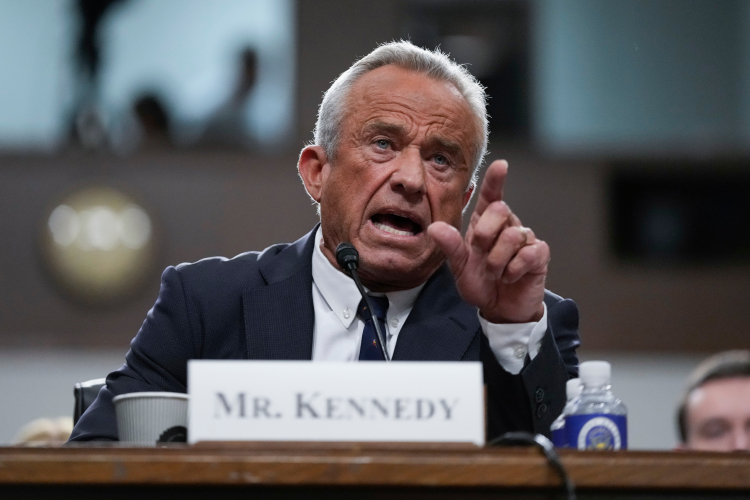
Health and Human Services (HHS) Secretary Robert F. Kennedy Jr. says his recently announced vaccine-injury plan will help patients. In reality, it does little for the patients Kennedy claims to be championing, while giving trial lawyers a government-funded paper trail.
“We must listen to patients and families who report vaccine injuries,” Kennedy said when he announced the plan in October. Everyone supports listening to patients and families, but people injured by vaccines already have a program designed to compensate them: the National Vaccine Injury Compensation Program (VICP). Kennedy calls it “broken,” yet nothing in his plan would fix it.
Kennedy’s plan includes a National Institutes of Health clinic, opened October 5, to study and treat people who report health problems after vaccination. HHS also plans to require electronic health records to log vaccine-related adverse events and to make reporting to the Vaccine Adverse Event Reporting System (VAERS) easier.
The CDC’s own website says VAERS data alone “cannot determine if the vaccine caused the reported adverse event.” Yet Medicare is moving forward with a plan to pay doctors for the time they spend filing those reports, without explaining how that would work in practice.
In July, Medicare proposed a 2027 payment rule that would create a new billing code for “the diagnosis and treatment of vaccine adverse effects.” Doctors could bill it in 15-minute blocks once they document that a patient’s symptoms followed vaccination and rule out other causes.
Physician groups have rightfully objected. The Infectious Diseases Society of America told Medicare the code is “neither clinically necessary nor advisable as a matter of public health policy” and could lend credence to “misperceptions about vaccine safety.” The American Academy of Neurology warned the extra payment “could create incentives to misattribute nonspecific symptoms to vaccination without clear clinical evidence.”
This proposal would create a government-funded record linking common illnesses and symptoms to the timing of a vaccine, no matter how tenuous the connection. That won’t make patients safer or protect the public.
What it will do is give trial lawyers new claims to file and a new stream of contingency-fee business. It also fits Secretary Kennedy’s longstanding pattern of putting his former trial-bar colleagues ahead of American families.
In March, Aaron Siri, a vaccine-injury lawyer and longtime Kennedy ally, filed a petition asking HHS to add more than 300 conditions to VICP’s injury table, the list of injuries the program presumes a vaccine caused. Dorit Reiss of UC Law San Francisco told Reuters the petition treats “simply analyzing potential harms” as enough to establish an association. Kennedy’s new clinic exists in part to analyze potential harms.
The bigger fight is over autism. Kennedy has floated adding it to the table, and Andrew Downing, a senior advisor at HHS, has said, “We have to figure out a way to capture these kids.” One analysis projects nearly $100 billion in first-wave autism claims, against a trust fund of about $4.7 billion as of late 2025.
If the fund runs dry, trial lawyers will have a new argument for sending injury cases back to civil court, where they typically receive about a third of whatever their clients recover. Within VICP, federal law bars them from taking any share of a family’s award, and since its founding, it has paid injured people and their families more than $5 billion.
Instead of trying to tear down VICP, Secretary Kennedy should promote a series of straightforward reforms that would make a real difference. For example, Congress set a 240-day deadline for deciding VICP claims but allows for only eight judges to hear cases. Unsurprisingly, the Justice Department reported in December 2025 that settled claims were taking an average of 945 days to resolve. The $250,000 death benefit and the $250,000 cap on pain-and-suffering awards also haven’t changed since 1986.
Kennedy has pitched his October plan, from the NIH clinic to the electronic health record requirement, to “earn back trust in our public health institutions.” Vaccine victims will trust the system when it decides their claims sooner and pays them more.
The President can also tell Centers for Medicare and Medicaid Services Administrator Mehmet Oz to keep the final rule free of the billing code that would pay doctors extra to diagnose suspected vaccine reactions. And he can stop Secretary Kennedy from allowing the trial bar to help write the administration’s vaccine-injury policy.
Matthew Kandrach is president of Consumer Action for a Strong Economy (CASE).
Health and Human Services (HHS) Secretary Robert F. Kennedy Jr. says his recently announced vaccine-injury plan will help patients. In reality, it does little for the patients Kennedy claims to be championing, while giving trial lawyers a government-funded paper trail.
“We must listen to patients and families who report vaccine injuries,” Kennedy said when he announced the plan in October. Everyone supports listening to patients and families, but people injured by vaccines already have a program designed to compensate them: the National Vaccine Injury Compensation Program (VICP). Kennedy calls it “broken,” yet nothing in his plan would fix it.
Kennedy’s plan includes a National Institutes of Health clinic, opened October 5, to study and treat people who report health problems after vaccination. HHS also plans to require electronic health records to log vaccine-related adverse events and to make reporting to the Vaccine Adverse Event Reporting System (VAERS) easier.
The CDC’s own website says VAERS data alone “cannot determine if the vaccine caused the reported adverse event.” Yet, Medicare is moving forward with a plan to pay doctors for the time they spend filing those reports, without explaining how that would work in practice.
In July, Medicare proposed a 2027 payment rule that would create a new billing code for “the diagnosis and treatment of vaccine adverse effects.” Doctors could bill it in 15-minute blocks once they document that a patient’s symptoms followed vaccination and rule out other causes.
Physician groups have rightfully objected. The Infectious Diseases Society of America told Medicare the code is “neither clinically necessary nor advisable as a matter of public health policy” and could lend credence to “misperceptions about vaccine safety.” The American Academy of Neurology warned the extra payment “could create incentives to misattribute nonspecific symptoms to vaccination without clear clinical evidence.”
This proposal would create a government-funded record linking common illnesses and symptoms to the timing of a vaccine, no matter how tenuous the connection. That won’t make patients safer or protect the public.
What it will do is give trial lawyers new claims to file and a new stream of contingency-fee business. It also fits Secretary Kennedy’s longstanding pattern of putting his former trial-bar colleagues ahead of American families.
In March, Aaron Siri, a vaccine-injury lawyer and longtime Kennedy ally, filed a petition asking HHS to add more than 300 conditions to VICP’s injury table, the list of injuries the program presumes a vaccine caused. Dorit Reiss of UC Law San Francisco told Reuters the petition treats “simply analyzing potential harms” as enough to establish an association. Kennedy’s new clinic exists in part to analyze potential harms.
The bigger fight is over autism. Kennedy has floated adding it to the table, and Andrew Downing, a senior advisor at HHS, has said, “We have to figure out a way to capture these kids.” One analysis projects nearly $100 billion in first-wave autism claims, against a trust fund of about $4.7 billion as of late 2025.
If the fund runs dry, trial lawyers will have a new argument for sending injury cases back to civil court, where they typically receive about a third of whatever their clients recover. Within VICP, federal law bars them from taking any share of a family’s award, and since its founding, it has paid injured people and their families more than $5 billion.
Instead of trying to tear down VICP, Secretary Kennedy should promote a series of straightforward reforms that would make a real difference. For example, Congress set a 240-day deadline for deciding VICP claims but allows for only eight judges to hear cases. Unsurprisingly, the Justice Department reported in December 2025 that settled claims were taking an average of 945 days to resolve. The $250,000 death benefit and the $250,000 cap on pain-and-suffering awards also haven’t changed since 1986.
Kennedy has pitched his October plan, from the NIH clinic to the electronic health record requirement, to “earn back trust in our public health institutions.” Vaccine victims will trust the system when it decides their claims sooner and pays them more.
The President can also tell Centers for Medicare and Medicaid Services Administrator Mehmet Oz to keep the final rule free of the billing code that would pay doctors extra to diagnose suspected vaccine reactions. And he can stop Secretary Kennedy from allowing the trial bar to help write the administration’s vaccine-injury policy.
Matthew Kandrach is president of Consumer Action for a Strong Economy (CASE).