


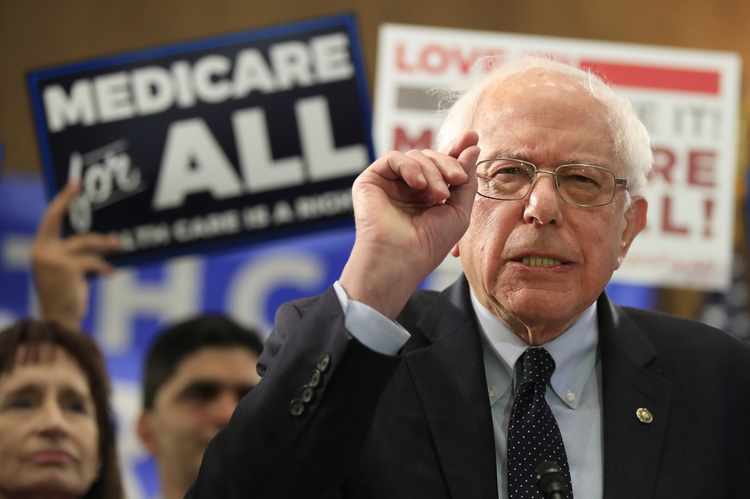
Few political slogans carry the seductive simplicity of "Medicare for All." Wrapped in the rhetoric of compassion and egalitarian justice, single-payer healthcare is routinely presented not as an economic choice, but as an undeniable moral imperative. Yet beneath its benevolent facade lies a fundamental transformation of the relationship between the citizen and the state—one that imperils the ethical foundations of a free society, saps the civic spirit, and mortgages the economic vitality of future generations.
The ethical case for single-payer relies on an unexamined sleight of hand: transmuting a scarce service into an unconditional positive right. Unlike negative rights—such as freedom of speech or religious conscience, which merely require others to refrain from interference—a right to a service requires a positive claim on the labor, time, and property of one's neighbors.
To declare that healthcare is a right guaranteed entirely by the state is to declare that the state possesses the legitimate authority to compel taxpayers to finance the necessary wealth and conscript the productive output of clinicians, researchers, and taxpayers at will. This fundamentally distorts the moral character of redistribution. Charity, civic responsibility, and voluntary association are virtues precisely because they represent conscious moral choices. When generosity is replaced by bureaucratic extraction, virtue gives way to administrative coercion.
A state that assumes total responsibility for the bodily welfare of every citizen must inevitably claim jurisdiction over the private behaviors that influence health. If the collective treasury pays every bill, the collective will soon demand a say in what individuals eat, how they exercise, and how they live. The redistributive state begins with an entitlement and ends with paternalistic supervision.
The deeper injury of the universal welfare state is spiritual rather than fiscal. In Democracy in America, Alexis de Tocqueville warned of a benign, administrative despotism that does not tyrannize its subjects through cruelty, but rather "covers the surface of society with a network of small complicated rules, minute and uniform," gradually relieving men of the "trouble of thinking and all the pain of living."
When government assumes the role of universal guarantor, it severs the link between individual agency, responsibility, and consequence. Personal prudence—the discipline to save, to plan for life's vicissitudes, and to cultivate family and community mutual aid—is rendered superfluous. In its place arises an entitlement mentality that measures citizenship not by what one contributes, but by what one can extract from the common pool.
This dependency state changes how citizens view one another. In a competitive market, individuals cooperate voluntarily; transactions require mutual consent and mutual benefit. In a politicized, single-payer monopoly, resources are strictly zero-sum. Because medical resources are finite, care must be rationed—not by transparent price signals with administrative decree, queues, and political influence. Citizens are transformed into competing claimants lobbying bureaucrats for access to essential care, breeding cynicism, resentment, and a collapse in social trust.
The macroeconomic toll of such a regime severe. Independent estimates, from the Congressional Budget Office to independent researchers, indicate that a comprehensive single-payer system would absorb tens of trillions of dollars in new federal spending over its first decade.
Financing an undertaking of this magnitude would require unprecedented peacetime tax increases. Marginal tax rates on labor and capital would need to rise sharply across all income tiers, not merely the highest brackets. As the return on extra labor and enterprise diminishes, work incentives atrophy. Entrepreneurs take fewer risks; professionals work fewer hours; productivity slows.
More damaging still is the direct blow to private capital formation. Sustainable economic growth relies on the conversion of current savings into productive investment: factories, software architectures, advanced laboratory equipment, and logistics infrastructure. Moving roughly one-fifth of the American economy onto the public ledger diverts vast streams of private savings into immediate government consumption. Capital that would have built the high-productivity industries of tomorrow is instead consumed by today's operational healthcare costs.
This dynamic represents a profound intergenerational injustice. With the federal debt already exceeding annual gross domestic product, funding a universal entitlement would inevitably accelerate sovereign borrowing. The current generation would consume comprehensive, zero-copay medical services today, while leaving the bill—in the form of debt burdens, debased currency, and diminished productivity—to children and grandchildren who had no voice in the bargain. Such a system is designed to consume future generational wealth to subsidize current comfort.
The United States currently serves as the indispensable engine of global biomedical advancement. Although the domestic healthcare market has documented flaws and distorted incentives, its market pricing and venture ecosystem generate the overwhelming majority of the world's new pharmaceutical molecules, complex surgical robotics, gene therapies, and diagnostic technologies.
Other developed nations with single-payer or heavily centralized models often manage their budgets by acting as free riders: they impose strict monopsony price controls on drugs and devices developed with American venture capital and commercialized on American shores.
Under Medicare for All, the American market would cease to play this role. A single federal monopsonist tasked with balancing a monstrous budget must inevitably drive down provider reimbursement rates and cap payments for novel treatments. While price controls can artificially lower costs in the short term, they dry up high-risk, long-horizon research and development. Investors do not deploy billions of dollars into high-failure clinical trials without the prospect of competitive returns.
When capital exits the life sciences, medical progress does not merely slow; it freezes. The treatments that will never exist—the therapies for neurodegenerative disorders, the breakthrough oncology vectors, the cures for rare pediatric diseases—will leave no visible paper trail. They will simply remain undiscovered, a hidden casualty of central planning.
A society's health cannot be measured solely by the volume of medical services consumed at public expense. It must also be measured by the vigor of its civic institutions, the preservation of personal responsibility, the flourishing of its capital, and its capacity to invent a better future.
Single-payer healthcare offers the illusion of security at the expense of human agency and economic dynamism. In exchange for the false promise of "free" provision, it demands the surrender of individual sovereignty, the depletion of national capital, and the stagnation of the very science that keeps humanity alive. Genuine healthcare reform must empower individuals, restore transparent pricing, and unleash market competition—not replace the vital energies of a free people with the stultifying embrace of the state.
