


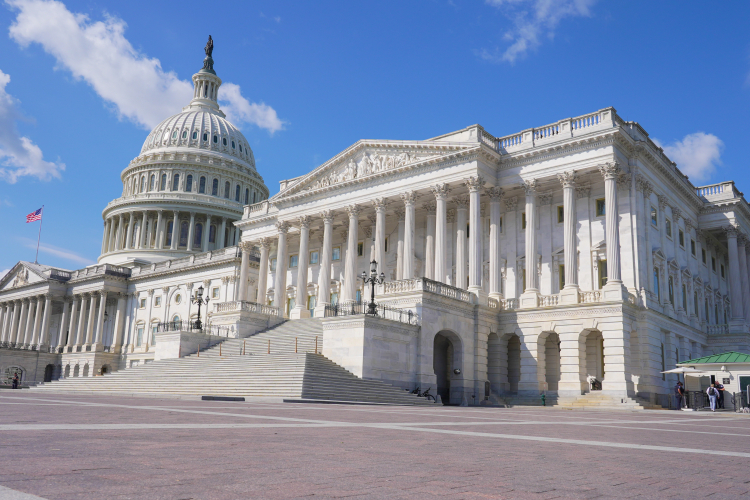
Care at home providers have a simple message for Congress: Americans want access to care at home. Whether getting back on their feet after a long hospital stay or nearing the end of life, Americans overwhelmingly choose to receive care at home versus in an institutional setting. It’s time our healthcare policy reflects that demand.
Yet, recent policies – from broad-brush bans on new home health and hospice providers to years of unpredictable Medicare and Medicaid payment cuts – have made this pillar of our country’s healthcare system increasingly unstable. At the same time, fraud in some parts of the country has underscored the need for effective, targeted oversight to protect those who need care. Congress now has an opportunity to address these problems, strengthening access to home-based care. Passionate advocates recently took to the Hill, hoping to move us closer to a reality where policy and regulatory enforcement actions strengthen, not hinder, access to these essential services.
When it comes to Medicare home health, which provides skilled care to older adults and people with disabilities recovering from serious injury or illness, Senator Collins and Senator Blackburn have taken steps to protect and expand access to care. Senator Collins recently introduced the Medicare Home Health Payment Integrity and Protection Act (S. 5250) to bring long-overdue stability to Medicare home health reimbursement while giving the government better tools to keep bad actors out of the program. This legislation sends a strong message to members of Congress, and it has the Alliance’s full support.
Fraud hurts patients. It wastes taxpayer dollars and makes it harder for legitimate providers to do their jobs. We have zero tolerance for it. We want stronger safeguards at the front door of Medicare and better oversight where the risk of fraud is greatest.
Sen. Collins’ bill does that. It strengthens enrollment screening in high-risk markets while increasing oversight of new agencies, accreditation organizations, and providers showing warning signs. Protecting honest, quality providers from unfair penalties helps ensure they won’t pay the price for fraud they didn't commit, which is something that’s happening today across the country.
The legislation would also address Medicare's flawed home health payment methodology, which has relied, in large part, on data from known fraud hot spots. The bill would reset the Medicare home health base rate beginning in 2027 using more accurate datasets and end future temporary reimbursement cuts that threaten the viability of legitimate providers.
Due to existing capacity restraints, more than one-third of patients referred to home health never receive those services. This delay increases the likelihood of hospital readmissions and adverse outcomes. Hospitals are also having trouble discharging patients when home health isn't available, which leaves people in more expensive settings when they could be recovering at home. Congress shouldn't make that problem worse.
These constraints on patient access are compounded by downward adjustments in the home health payment rate by nearly 10% over the last five years. While we are appreciative of the CMS proposed rate increase for 2027, the home health proposed rule includes a -3% prospective temporary adjustment and provider enrollment provisions that may further restrict access to care.
The same principle should guide policy across the care-at-home community. Hospice patients and families deserve strong program integrity protections without policies that make it harder for good-faith providers to serve them. Medicaid beneficiaries need access to home and community-based services that allow them to remain part of their communities instead of being forced into institutionalized care. More than 700,000 Americans are already on years-long waiting lists for those services.
We also need to be careful with broad policies that treat every provider and every community as if the risks are the same. CMS' current nationwide enrollment moratorium for new Medicare home health agencies and hospices is an example of a sledgehammer approach, when a scalpel is the needed instrument. Fraud requires a strong response, but enforcement works better when it's aimed at the people and places where problems truly exist, not across-the-board punishments that harm legitimate providers. That's why targeted program integrity efforts matter so much. Congress and the Administration can be tough on fraud without making it harder for honest providers to care for patients.
The care at home professionals who recently advocated on Capitol Hill see the impact of these decisions every day. They know what happens when a patient can't find a home health provider or when a family can't get the support it needs to keep a loved one at home.
Congress has a chance to help. Passing the Medicare Home Health Payment Integrity and Protection Act is an important place to start. Our message to lawmakers is clear: make care at home available to every American who needs it.
Denis Fleming, Jr. is the Chief Government Affairs Officer at the National Alliance for Care at Home.
