


For several years now, Americans have been awaiting accountability for the missteps in the name of battling COVID-19 and the fraudulent information used to justify a number of actions. Unfortunately, for the many of us still eager for answers about the government’s unnecessarily draconian response, it doesn’t seem we’re any closer to getting answers. However, a lack of confidence in government information resulting from the COVID-19 response, is no reason to block the next cancer breakthrough.
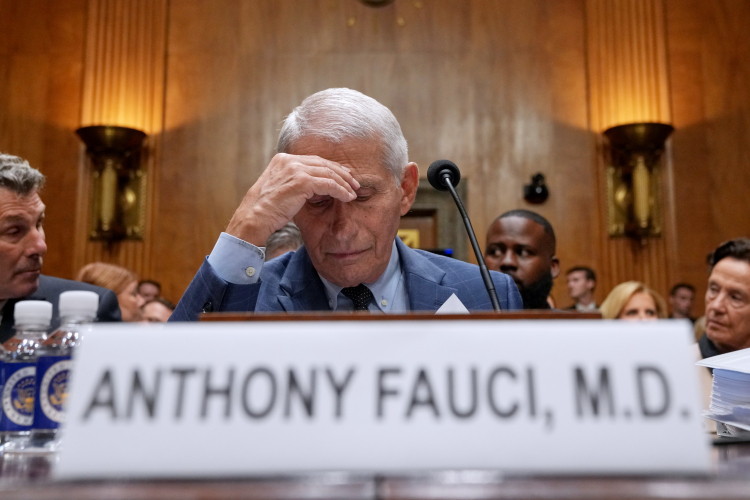
Dr. Anthony Fauci’s recent disastrous appearance before the Senate Homeland Security and Governmental Affairs Committee personified the deep-seated divisions that our country continues to face. But even as Americans and our elected officials rightfully probe lockdowns and misinformation of the COVID era, our response needs to be guided by scientific facts.
It is especially important when it comes to mRNA technology. mRNA vaccines use genetic instructions to help an individual’s immune system to battle viruses or cancer cells. The reputation of anything called mRNA was harmed by Dr. Fauci’s terrible communication during the crisis. Despite mRNA’s potential to create revolutionary life-saving therapeutics, many Americans have the perception the technology is dangerous thanks to public health officials and mandates that overstepped our rights.
The doubts created about mRNA is a tremendous disservice to healthcare innovation in America. While real questions remain about the government’s shifting guidance on COVID vaccines utilizing mRNA technology because they were sold as a preventable vaccine, not all mRNA treatments are problematic. There exists exhaustive evidence from across the world that mRNA vaccines can be safe and effective at preventing serious diseases and improving healthcare outcomes.
The country’s post-COVID approach to mRNA technology, however, is what really matters now, and the path we take may very well shape this decisive moment for the future of medicine. Now we are seeing the emergence of potentially transformative new cancer treatments – ones that would have been unimaginable not so long ago and that reverse setbacks to medical progress committed by Fauci and others.
Melanoma is the deadliest form of skin cancer and is projected to kill over 8,000 Americans just this year. Yet in a recent late-stage clinical trial, patients with advanced melanoma who received an individualized mRNA treatment alongside standard immunotherapy had their risk of their cancer returning or death cut significantly. As the first successful mRNA cancer medicine in the world to successfully clear a phase three study, this marks what could be a historic triumph in the fight against cancer.
Melanoma is just one of many cancer types where this technology is demonstrating remarkable potential to transform outcomes for patients. In the first trial of a personalized mRNA vaccine against glioblastoma, the most aggressive and lethal brain tumor, the treatment was found to rapidly and successfully trigger patients' immune systems to attack their tumors. And at Memorial Sloan Kettering, an mRNA treatment for pancreatic cancer kept nearly 90% of patients alive up to six years out – a much-needed beacon of hope for a condition with just a 13% five-year survival rate.
Despite these results, there are growing signs that mRNA research is under threat by certain policymakers. State legislators from Montana to Minnesota to Texas tried to restrict mRNA research and vaccines earlier this year, while several companies and research institutions developing future mRNA treatments had their federal funding stripped.
In many cases, these actions seem to be guided by lingering mistrust over the actions during COVID rather than what mRNA could be capable of delivering for Americans in the future. The truth is that mRNA treatments are subject to the same rules as any other standard drug, treatment, or medical device reviewed by the FDA: extensive clinical studies, independent review of the data, and rigorous surveillance once these treatments are available to patients.
The risk of hampering emerging research in this field is not only potentially depriving critically ill patients of future treatments, but also ceding America’s global scientific leadership. Chinese biotech companies signed a record $135.7 billion in out-licensing deals in 2025, nearly triple the year before, and they’re already on pace to break it this year. In fact, China now registers more clinical trials than the U.S., and Chinese companies are running a number of trials for mRNA treatments, including programs for cancer.
If mRNA bans or restrictions were to come into place in the U.S., the therapies we decline to develop here in America could well emerge from other nations and be sold back to American patients. What’s more, the American biopharmaceutical industry supports more than 5 million jobs, with clinical trial sites generating over $60 billion in economic activity. Policy that undermines continued innovation in this field – or the threat of it – could relocate those economic gains to competitors like China, which has no such restrictions.
The remarkable progress American scientists have made in mRNA innovation is worth protecting. Even Secretary Kennedy, no friend of mRNA, has stated he believes in its potential to treat cancer.
Policymakers should do everything they can to help the country realize that potential and ensure America remains at the forefront of modern medicine.
