


American medicine has entered the precision era. Too much of our insurance system is still operating on dial-up.
Every October Washington congratulates itself for promoting breast cancer awareness. Television anchors remind women to schedule their mammograms. Professional athletes wear pink. Everyone agrees that early detection saves lives. They're right. But here's the part almost nobody talks about. A mammogram isn't a diagnosis. It's the beginning of one.
When a mammogram finds something suspicious—as it is designed to do—the next question shouldn't be, "Can I afford to find out what this means?" Far too often, it is.
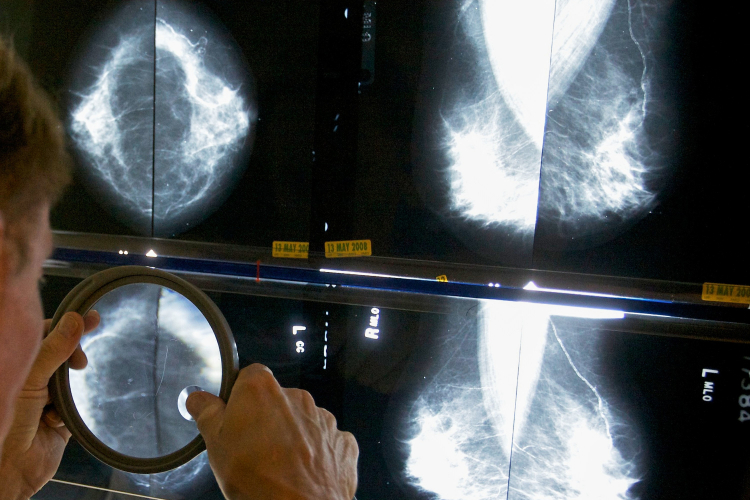
Most health plans cover screening mammograms without patient cost-sharing. But when a physician orders the diagnostic mammogram, ultrasound or MRI needed to determine whether an abnormal finding is breast cancer, many women suddenly face deductibles, copayments or coinsurance.
Think about that. We encourage women to get screened. Then we charge them to learn whether the screening found cancer. If somebody intentionally designed a policy this irrational, they would have been laughed out of the room. Instead, it evolved quietly over decades—one reimbursement rule at a time. That's how bad policy usually happens.
The Access to Breast Cancer Diagnosis (ABCD) Act fixes that mistake. Notice I said mistake. Not a revolution. Not socialized medicine. Not another thousand-page health care bill. A mistake.
The legislation doesn't require unnecessary testing. It doesn't substitute politicians for physicians. It simply says that when a doctor determines additional breast imaging is medically necessary, insurance shouldn't become the obstacle. That sounds less like politics than basic customer service. Predictably, opponents will focus on costs. They're asking the wrong question.
The issue isn't whether diagnostic imaging costs money. Of course it does. The issue is whether diagnosing breast cancer early costs less than diagnosing it late. We already know the answer. Later diagnosis means more extensive surgery, more chemotherapy, more hospitalizations, more disability and much higher costs—for families, employers, insurers and taxpayers alike. Pay now. Or pay considerably more later. That's not liberal math. It's not conservative math. It's just math.
More importantly, it's good medicine. The larger problem is familiar. Medical science keeps changing. Insurance rules often don't. Today's physicians practice medicine that would have seemed unimaginable a generation ago. Artificial intelligence is improving imaging. Molecular diagnostics are transforming treatment decisions. Precision medicine is becoming routine rather than remarkable. Coverage policy? Not so much. Too many reimbursement rules still reflect yesterday's medicine while physicians practice tomorrow's.
Washington loves to celebrate innovation. But innovation doesn't end when FDA approves a technology. Innovation isn't complete until patients can benefit from it. Coverage policy needs to modernize alongside medical science. That's why the ABCD Act matters. Not because it transforms American health care. Because it removes one outdated barrier that should never have survived into modern medicine.
Washington has developed an unfortunate habit. Every health care problem supposedly requires a trillion-dollar solution. Sometimes all Congress has to do is stop doing something stupid. This is one of those times.
The ABCD Act won't eliminate breast cancer. It won't eliminate anxiety after an abnormal mammogram. What it will do is eliminate one unnecessary financial obstacle standing between patients and answers. That's worth doing. We've spent decades telling women to become active participants in their own health care. Get screened. Know your family history. Listen to your physician. Take charge of your health. Then, at precisely the moment medicine becomes most important, insurance tells too many patients to reach for their wallets.
The biggest obstacle to better breast cancer care isn't science anymore. It's outdated insurance policy. The ABCD Act won't cure breast cancer. But it will remove one obstacle that never should have existed in the first place. Congress should get it done.
Peter J. Pitts, a former FDA Associate Commissioner, is President of the Center for Medicine in the Public Interest.
