


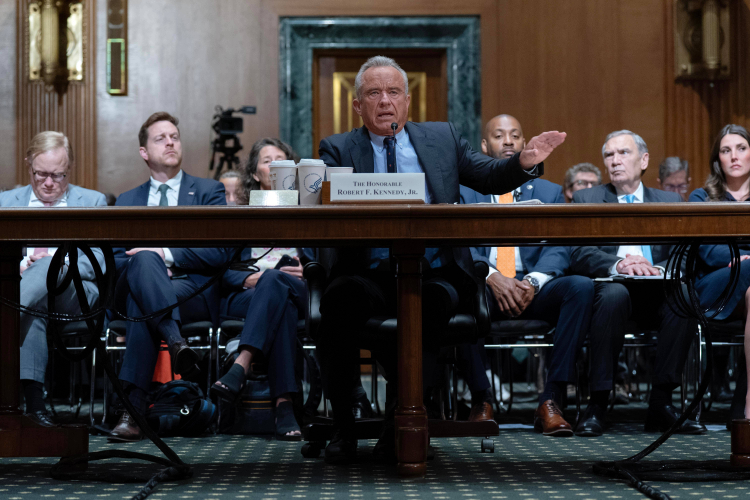
As November approaches, the Trump administration and Republican lawmakers are carefully crafting a winning and targeted message. This has—in part—meant rejecting the worst excesses of the so-called Make America Healthy Again agenda. Amid bipartisan pushback against Department of Health and Human Services (HHS) Secretary Robert F. Kennedy Jr.’s prohibitionary policies, the Secretary seemed to shift his tone in recent Congressional hearings. Hopefully, Secretary Kennedy also changes his tune on harm reduction 7-OH (7-hydroxymitragynine) products, which Kennedy has unfairly demonized and taken steps to ban. The evidence is clear: these products are safe and prohibition would do far more harm than good. As elections quickly approach, lawmakers and HHS officials should work together to put patients and consumers first.
7-OH is a naturally occurring component of the kratom plant (Mitragyna speciosa), which has been used for centuries in Southeast Asia and, increasingly, in the U.S. for pain management, focus and other therapeutic purposes. In 2023, manufacturers began isolating 7-OH and selling it independently from kratom leaf.
Even as these products have become increasingly popular for pain relief, officials such as Secretary Kennedy claim that restrictions against 7-OH will “protect the health of our nation’s youth as we advance our mission to Make America Healthy Again.” There is simply no evidence to support that assertion. As Cato Institute senior fellow and healthcare expert Jeffrey A. Singer notes, “Fatal overdoses in which 7‑OH has been implicated are exceedingly rare, and deaths linked to kratom more broadly are rarer still. In the limited cases where coroners listed kratom or 7‑OH as contributing factors, polysubstance use was the norm. Roughly two-thirds of decedents had fentanyl in their systems. About one-third had heroin present, and just under one-fifth had prescription opioids or cocaine. Around 80% had documented histories of substance misuse, and about 90% were not receiving clinical care for pain.”
Prohibition is far more dangerous for consumers than allowing continued access to 7-OH products. Regulators with any knowledge of history ought to know better than to ban products based on fear and misinformation. Ratified in 1919, the 18th Amendment to the U.S. Constitution banned the manufacture, sale, transportation, importation and exportation of “intoxicating liquors.” As historian and author of “Dry Manhattan: Prohibition in New York City” Michael Lerner noted:
“As the trade in illegal alcohol became more lucrative, the quality of alcohol on the black market declined. On average, 1,000 Americans died every year during the Prohibition from the effects of drinking tainted liquor.”
While Prohibition is commonly regarded by policymakers as a failed experiment, it’s certainly not America’s only case of command and control. Decades of heavy-handed policies against cannabis products have resulted in mass incarceration and the rise of dangerous drug cartels pedaling illicit products.
And, thanks to a vague and open-ended call by Congress to protect the “public health” with regards to tobacco harm reduction products, the FDA has denied more than 99% of applications, effectively criminalizing the market.
Policymakers have repeatedly tried to eliminate demand by criminalizing supply—only to drive markets underground, empower illicit actors, and strip away basic consumer protections. A ban on 7-OH would likely produce the same predictable results. Instead of regulated and labeled products, consumers would be pushed toward untested black-market alternatives with unknown potency and contaminants. That shift doesn’t reduce risk. It magnifies it, while making it harder for authorities to monitor safety trends or intervene effectively.
Just as importantly, prohibition tends to ignore why consumers turn to these products in the first place. Many seek alternatives for pain management or wellness purposes, often in response to gaps in the traditional healthcare system. Eliminating access without addressing underlying demand does nothing to solve that problem. History shows that harm reduction, transparency, and smart regulation outperform blanket bans every time. If policymakers are serious about protecting public health, they should focus on quality standards, accurate labeling, and consumer education—not repeat the costly mistakes of prohibition that have failed for generations.
This, not ill-informed bans and infantilizing consumers, is a winning midterm message.
Ross Marchand is the executive director of the Taxpayers Protection Alliance.
