


I have spent my career as a clinical immunologist, working with patients whose immune systems can’t protect them against everyday infections. As the medical director of the Immune Deficiency Foundation, I advocate for a population of more than 72 million Americans who don't have something that so many of the rest of us take for granted—a fully functioning immune system. Therefore, they are incapable of mounting a protective immune response both to infections and to vaccines.
Decisions about vaccination are never routine for this group, which represents 1 in 5 Americans and includes 14 million immunocompromised children and working-age adults, 58 million seniors whose immune system naturally weakens with age, and babies who are too young to be vaccinated. For them, changes in the vaccination status of their community carries real clinical weight.
I have spent years helping other clinicians learn how to approach these conversations with the care and nuance they require. Unfortunately, today, those conversations are harder than they’ve ever been.
I’ve heard from many clinicians who say an increasing number of their patients don’t know what guidance to follow when it comes to vaccines. Parents who once followed their pediatrician’s guidance without hesitation now bring in articles questioning whether routine childhood vaccines are safe. Adults managing chronic conditions ask whether last year’s recommendations are still valid.
When federal recommendations that were long regarded as the gold standard vaccination guidelines change precipitously, even the most trusting patients begin to waver. For those living without robust immune systems, widespread confusion about vaccines can increase their exposure to common infections, with life-threatening consequences.
Their safety depends on the choices of the people around them. When vaccination rates are high, the spread of infection is limited, creating a safer environment for those who are most vulnerable. But when individuals forgo vaccination, these diseases spread more easily through the community, increasing the risk of exposure. As a result, illnesses that may feel routine for a healthy person, like the flu or other respiratory viruses, can lead to severe complications, hospitalization, or death in someone with a weakened immune system. Thus, when someone chooses to vaccinate, they are taking a critical step in protecting the immunocompromised who do not have that option.
When a parent elects to skip their child’s measles shot because they don’t know who to trust, the risk doesn’t fall just on that child. It falls on their immunocompromised classmate sitting at the desk next to them. When a coworker skips a flu shot, the risk falls on the colleague across the hall who is receiving chemotherapy. When a new aunt or uncle is unsure whether to get a vaccine, the risk falls on the newborn niece or nephew they’re cradling in their arms.
The 72 million Americans the Immune Deficiency Foundation advocates for are not merely a data point. They’re your neighbor, your coworker, your elderly relative, or your friend’s newborn.
For more than 45 years, the organization has supported the primary immunodeficiency community, made up of Americans living with more than 550 rare, chronic conditions in which part of the body’s immune system is either missing or doesn’t work properly. For decades, long before the COVID pandemic or the uncertainty of today’s health environment, our organization has fought on behalf of those who have grappled with vulnerabilities invisible to most Americans.
The immunocompromised community we represent must guard against disease exposure, living every day in a hyper-vigilant way that most Americans experienced for the first time in 2020. They’ve long relied on America’s medical system to be stable and adhere to evidence-based science, and for the rest of society to trust that their guidance was being issued in our collective best interests.
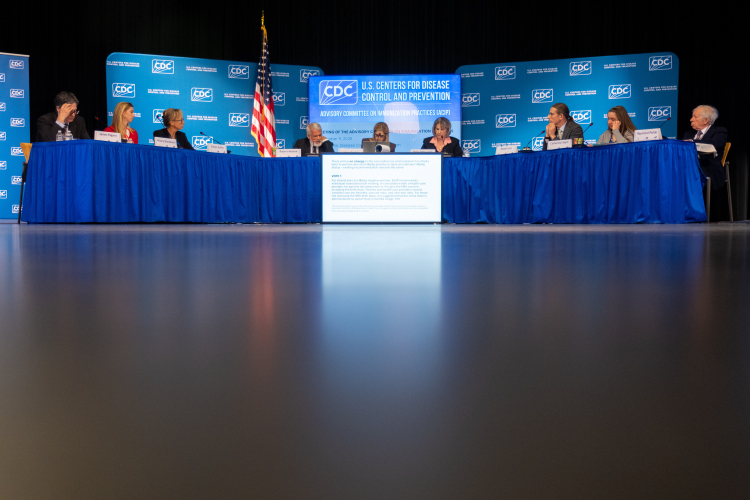
That’s why recent changes to the Advisory Committee on Immunization Practices (ACIP) are so concerning. For over 60 years, ACIP has served as the independent, evidence-based body that defines America's clinical vaccine standards. Its recommendations guide clinical care, determine which vaccines are covered by insurance at no cost, and help protect low-income children through Medicaid and the Vaccines for Children Program.
But last year, Health and Human Services Secretary Robert F. Kennedy Jr. dismissed all 17 independent experts on the committee. The acting director of the Centers for Disease Control and Prevention (CDC) then announced guidelines that scale back the number of vaccines recommended for all children, from covering 17 diseases to just 11. While a federal court issued an injunction pausing all these changes, HHS has indicated it will appeal and has published an amended ACIP charter. Even if that appeal fails, the damage has been done in terms of public distrust towards federal agencies, and the harm to the immunocompromised community will endure.
When federal guidance widely viewed as reliable, through both Republican and Democratic administrations, is disrupted, and states and medical organizations respond by adopting their own recommendations, patients and clinicians are left without the single trusted source they’ve long depended on.
These systems, alongside long-standing programs like the Vaccine Injury Compensation Program, which offers injured patients a streamlined path to compensation while shielding manufacturers of covered vaccines from civil liability, have kept vaccines safe, accessible, and affordable. And they were part of a social contract that helped protect those who cannot protect themselves.
Immunocompromised Americans deserve to have a system that they can trust, and one that those around them can trust as well. Lawmakers should champion the independent scientific reviews that have guided our vaccine policy for decades and protect the programs that keep crucial immunizations readily accessible.
As our representatives in government weigh next steps on vaccines, it’s imperative that they remember the immunocompromised, the elderly, and the very young, who need broad-based immunization practices to live their fullest lives. These individuals deserve to live in a country where health leadership sees them for who they are—neighbors, parents, the future of our country—and prioritizes their well-being through consistent, evidence-based health guidelines.
Paula Henao, MD serves as the Medical Director of the Immune Deficiency Foundation.
