


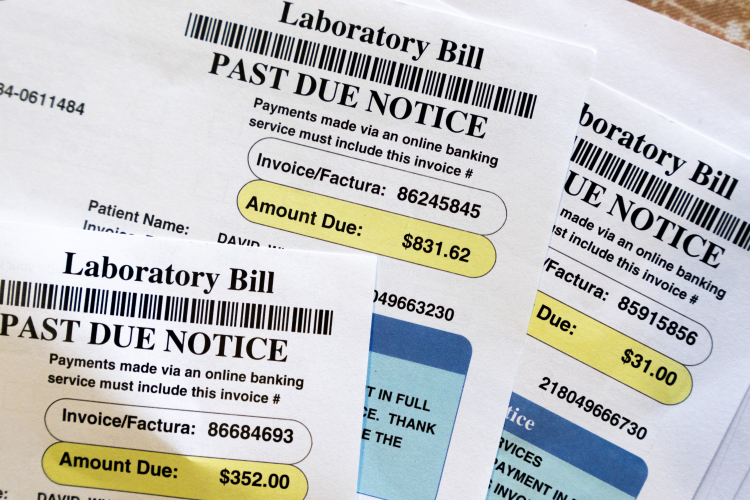
Health care affordability is polling as one of the top issues for voters this midterm election year.
A key way for Congress to address that issue by encouraging health care price transparency. It’s the idea behind the Patients Deserve Price Tags Act—a comprehensive health care price transparency bill that has been steadily gaining bipartisan support in the Senate.
As it stands now, the amount paid of any given medical test, procedure, drug or device can vary widely, not only between providers but also at the same hospital between different payers.
The Patients Deserve Price Tags Act would establish enforceable price disclosure requirements on hospitals, laboratories, imaging centers, ambulatory surgical centers, and health insurers. Requiring that data to be made public is the first step toward enabling patients to know the actual cost of “shoppable” medical services—as well as how much their insurance will pay—before they get a test or procedure.
The bill would also give the businesses and unions that sponsor employment-based health plans the right to obtain full claims and payment data from the vendors administering their plans.
Employment-based plans currently cover more than 160 million Americans—or roughly half the population—and federal law requires plan sponsors to operate their plans in the best interests of their enrollees. Yet, plan sponsors often don’t have the pricing data and other information they need to ensure that plan funds are being well spent. That’s because the vendors those plans rely on—insurers, third-party administrators, pharmacy benefit managers, etc.—often don’t share that information with their clients.
The Patients Deserve Price Tags Act would give plan sponsors transparency into where the money is going. They would be able to see not only the differences in reimbursements paid to competing medical providers, but also any fees, discounts, or other compensation that their administrative vendors are receiving from those same providers and from the suppliers of drugs and medical devices.
Enabling employment-based health plans to identify how medical providers and administrative middlemen are being paid will empower them to negotiate better deals with hospitals and other medical providers. It will also enable them to identify wasteful spending and any self-dealing or kickbacks currently lining the pockets of administrative middlemen. The resulting savings will effectively mean less employee compensation goes into funding escalating health benefit costs and more into worker take-home pay.
Yet, arming employment-based health plans with the data to negotiate better deals is only part of the solution. To generate the kind of robust price competition that really drives down costs and spending in other economic sectors, it will be necessary to get patients—who are the ultimate consumers—fully engaged as well.
The way to do that is by creating incentives for health plans to turn the “actionable information” of price data into “informed action” by patients shopping for care.
Health plans should be encouraged to leverage the data generated by price transparency to empower their enrollees with easy-to-use shopping applications, and to offer them tangible rewards for making better value purchases. Congress can encourage that kind of positive change with three modest adjustments to current law:
- Clarify in the tax code that when a health plan gives a patient a cash reward for choosing to get care from a better value provider, that payment is tax-free to the patient—just like other insurance reimbursements or refunds.
- Modify the tax code so that when patients with Health Savings Accounts (HSAs) get a reward from their health plan they can deposit it into their HSA without it counting against the maximum annual contribution limit.
- Amend the law that requires health insurers to give enrollees refunds if the plan spends less than 80% of premium revenue on medical care or “activities that improve health care quality,” to also include plan spending on assisting or rewarding enrollees shopping for better value care. That way, insurer investments in shopping apps and providing cash rewards to patients for obtaining better value care would count as spending that benefits enrollees—rather than as higher administrative costs for which insurers are penalized.
The most effective way to bring down the cost of health care is for people to see the real prices that different providers charge and how much other people are paying. When prices can easily be compared, only providers that can demonstrate better quality or value will be able to successfully charge higher prices. Their competitors will need to either get better or get cheaper.
That is how price competition works in other markets. It can work in health care too.
Edmund Haislmaier is a Senior Research Fellow in Health and Welfare Policy at The Heritage Foundation.
