


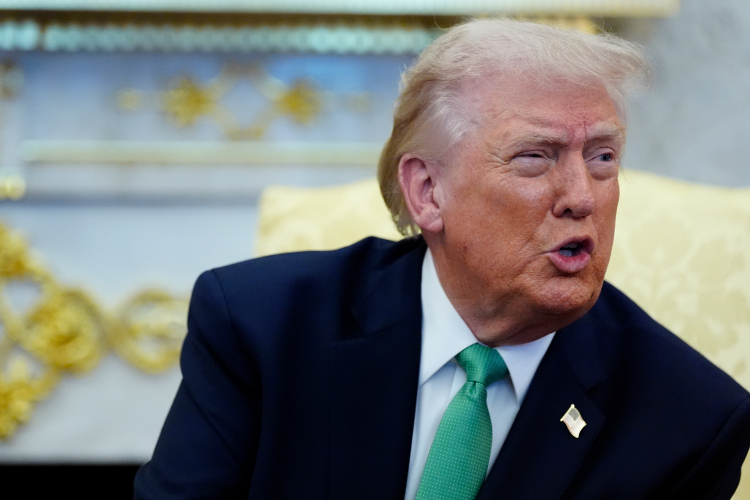
Japanese Prime Minister Sanae Takaichi will arrive in Washington this week to meet with President Trump for trade discussions most policymakers anticipate will further bolster our two nations’ historic economic alliance. Already, President Trump has demonstrated the power of strong trade negotiations through the historic U.S.–Japan trade deal reached this past summer, in which Japan committed to invest $550 billion in the United States across a wide range of industries, from energy infrastructure to semiconductors and critical minerals.
Yet despite these successes, one major imbalance remains: for too long, countries like Japan have benefited from American medical innovation without paying their fair share for the groundbreaking treatments developed in the United States. The same negotiating leverage that the administration used to secure Japan’s investment in the U.S. should now be used to ensure America’s medical innovation is valued fairly.
Through government price-setting schemes, Japan keeps drug prices artificially low at home. While this may reduce Japanese spending on biopharmaceuticals, this approach shifts a disproportionate share of the global cost of medical innovation onto the United States, leaving American patients, taxpayers, and companies to bear the cost of developing new lifesaving treatments that wealthy allied nations enjoy at a discount.
Japanese drug prices are not the product of a free market; they are the result of heavy government intervention that caps launch prices. For example, Japanese launch prices average just 39 percent of U.S. launch prices and are then further cut by government-mandated price revisions during the patent period. As a result, Japan pays roughly half of what Americans do for new medicines, creating an estimated $36 billion annual gap that drug manufacturers must absorb, diverting resources away from research and development (R&D) and slowing the pace of medical innovation, while shifting more costs onto American consumers.
These policies create ripple effects across pharmaceutical markets. What’s more, they often don’t actually benefit the patients they are ostensibly designed to help. Price suppression discourages competition and weakens manufacturers' incentives to enter or remain in certain markets. As a result, countries that cap prices on innovative medicines often end up with less competitive generic markets, forcing patients in those systems to pay more for generics than patients in the U.S. do.
Foreign price suppression also triggers the unsavory side effect of far less patient access to new treatments. Countries with strict price controls, including Japan, often experience significant delays before new therapies become available, leaving patients waiting years for treatments that reach American patients much sooner. In fact, Japanese patients have access to fewer than half of the new drugs produced worldwide, while American consumers can regularly access roughly 85 percent of these potentially lifesaving medicines.
At its core, the issue is foreign freeloading on American innovation—and it’s one President Trump and lawmakers should address directly. When wealthy nations rely on American investment while limiting their own contributions, resources that should fuel the next generation of cures are diverted to subsidize those disparities. President Trump should do what he does best: leverage trade policy to push allies to contribute their fair share to global medical innovation, ultimately pushing forward his America-first, pro-consumer agenda.
The December 2025 U.S.-U.K. trade agreement demonstrated that this can, and should, be part of a broader economic negotiation between allies. Japan’s visit presents an opportunity to build on that approach and ensure that one of the world’s largest, most advanced, and dynamic economies is actively supporting the medical innovation ecosystem to the benefit of consumers here at home and in Japan.
American leadership in medical innovation remains one of the nation’s greatest economic and strategic advantages. But leadership does not mean carrying the entire financial burden alone. If the United States is expected to continue driving medical breakthroughs, wealthy allies must finally begin paying their fair share—and smart trade policy can help ensure American innovation is valued rather than taken for granted.
Gerard Scimeca is chairman of CASE, Consumer Action for a Strong Economy, a free-market-oriented consumer non-profit organization he co-founded.
