


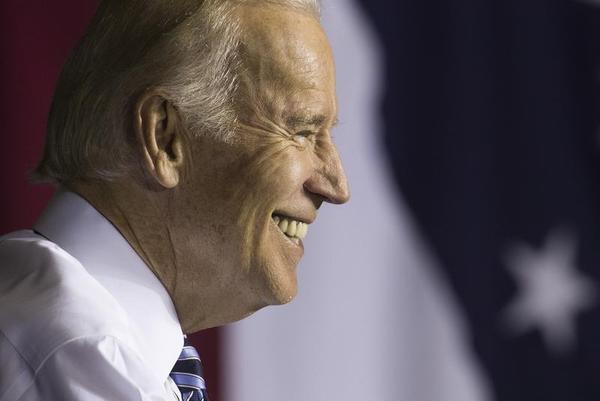
Vice President Joe Biden's pragmatic and ambitious quest deserves a shoutout.
I have written a fair amount about the war on cancer over the years—much of it skeptical of the progress we've made and critical of the way we've prosecuted this 45-year-old campaign. I have slammed the lack of collaboration and data sharing among researchers; chided our ancient, sclerotic, and deadly slow process for testing new treatments; and blasted our aversion to risk-taking and exploration when awarding scientific grants. I spent a decade writing a book on the cancer war—the subtitle of which is so blunt that it has angered many. (People do seem to like the title, though.) And when the Obama administration launched its cancer moonshot earlier in the year, I offered some not-so-shy advice about where it should start.
I mention all this because, in the past 10 months or so, the White House's Cancer Moonshot Task Force—led by Vice President Joe Biden—has done a remarkable job not only in framing the most substantive challenges of this quest, but in beginning to tackle some of them in earnest. Harnessing the power of huge amounts of data is part of the challenge. In one program that has gotten scant attention, for example, researchers are using advanced supercomputers at the Department of Energy's National Labs to analyze more than half a million medical records from one of the largest research cohorts in the world, the Million Veteran Program—an effort that might identify novel biomarkers or otherwise shed light on the disease. The National Cancer Institute is likewise borrowing the DOE's computational expertise for three more promising pilots. Yeah, it's nice when government agencies play nicely together in the same sandbox.
